French Crop Haircut: 46 Best Styles for Men (2026 Ultimate Guide + Barber Secrets)
The Only French Crop Haircut Guide You Actually Need
The French crop is among the most searched men’s hairstyles, yet few guides explain how to select the best version for your face, hair type, and lifestyle. This guide will help you pick the perfect French crop haircut for your unique features by bringing together expert advice, style options, and proven barber tips in one place. In one sentence: Use this guide to easily find your best French crop haircut and style to avoid common mistakes.
Most articles only display styles without clear guidance.
Instead of listing styles, this article is built as a decision system to guide you.
Because the truth is:
A French crop haircut only works when:
It matches your hair behavior.
It aligns with your face structure.
It’s cut with the correct technique.
Otherwise, it becomes just another average haircut.
In this guide, you’ll learn:
- 46 French crop haircut styles (fully categorized).
- Barber-level techniques that affect results.
- Mistakes that instantly ruin the haircut.
- How to pick the highest-performing style for YOU.
What Is a French Crop? (Clear + Featured Snippet Ready Answer)

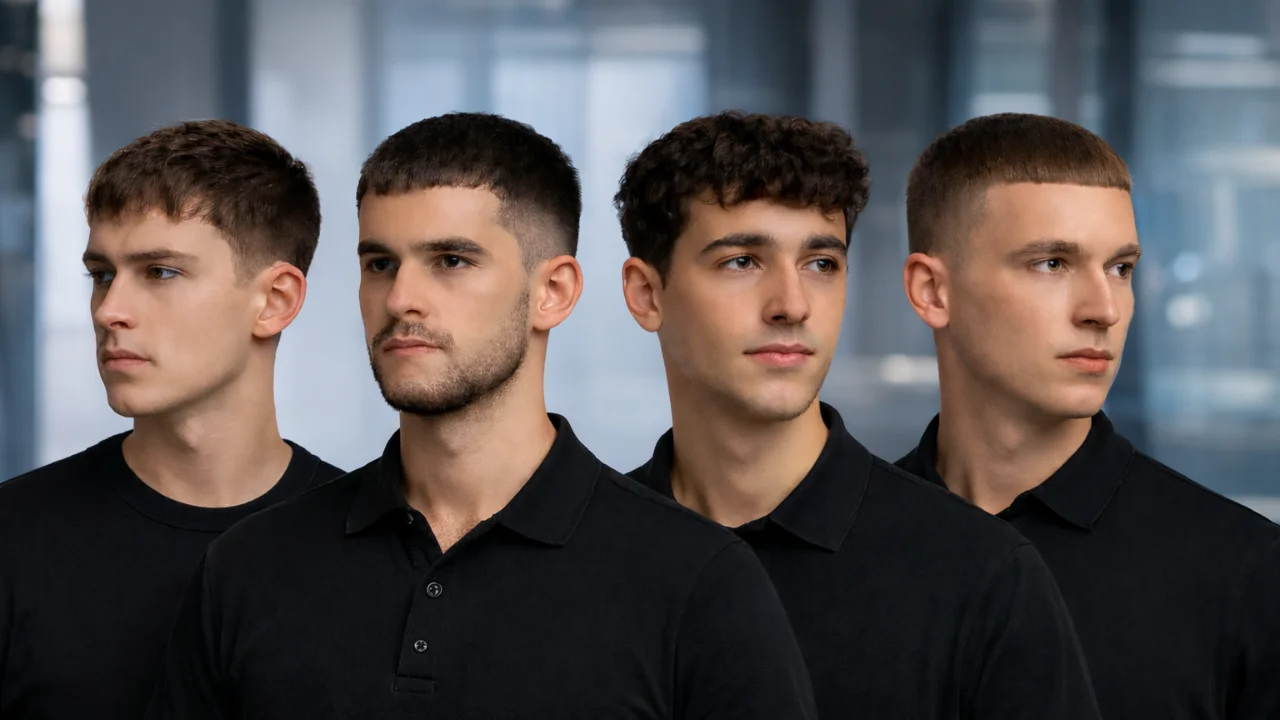
A French crop haircut is a men’s hairstyle featuring short sides, a textured top, and a forward fringe. It is known for being low-maintenance, versatile, and suitable for most face shapes and hair types.
Key defining features:
- Short sides (fade or taper).
- Cropped textured top.
- Forward fringe (signature element).
“Not sure which style suits you”? Here’s a quick answer:
- Thin hair → Textured crop.
- Professional → Mid taper.
- Bold → Skin fade.
This versatility explains why the French crop haircut stands out—when executed correctly, it can address all three factors.
Why the French Crop Haircut Outperforms Other Hairstyles

Unlike trend-driven hairstyles that rely on constant styling to look good, the French crop haircut is built on structure, so it holds its shape even when your routine doesn’t.
It adapts to different hair types and face shapes effortlessly, delivering a clean, intentional look that feels low-effort but still looks considered.
Real-Life Performance (Not Just Looks)
Most hairstyles fail outside of photos.
The French crop haircut works because:
- It follows natural hair fall.
- It needs minimal correction.
- It maintains structure over time.
This is precisely why barbers recognize it as a high-success haircut.
Low Maintenance, High Impact
- Styling time: under 3 minutes.
- Minimal product usage.
- Lasts 3–5 weeks.
Maximum efficiency with consistent appearance.
Adaptability Across Hair Types
- Thin hair → density illusion.
- Thick hair → bulk control.
- Curly hair → structured volume.
Few styles adapt this well.
6 Most Valuable French Crop Haircut Styles (High-Performance Core)
To help you find the right fit, these variations deliver consistent results across different french crop haircut types and lifestyles. Each style solves a specific problem, making your decision straightforward.
Textured French Crop (Best for Volume)

Best for: Thin or flat hair.
Problem → Solution:
Flat hair lacks movement → texture breaks uniform density.
Why it works:
Point cutting creates separation, making hair appear thicker.
Real-world use:
Perfect for daily styling with minimal products.
Limitation:
Over-texturing can create dryness.
For a complete styling guide, check out this detailed breakdown of the textured French crop.
French Crop Fade (Best for Sharp Look)

Suitable for: Modern, clean appearance.
Fixing method:
Soft cuts look plain → fade adds contrast.
Core reason:
Creates strong visual separation between top and sides.
Daily use:
Best for style-focused individuals.
Weak point:
Requires frequent maintenance.
You can explore different variations in this full guide on the French crop fade.
Messy French Crop (Best for Low Effort)

Ideal for: Casual lifestyle.
Problem → Solution:
Structured styles feel rigid → messy adds flexibility.
Key reason:
Maintains base structure with relaxed finish.
Everyday use:
Ideal for everyday styling.
Things to consider:
Too much product ruins the look.
For a more casual approach, see the full guide on the messy French crop.
French Crop Mid Taper (Best Balanced Style)

Great for: Most men.
Issue resolution:
Fade is too sharp → taper softens transition.
Primary reason:
Maintains a clean look without harsh contrast.
Real-life use:
Works in office + casual settings.
Limitation factor:
Less bold than fades.
Learn more about clean transitions in this detailed French crop mid taper guide.
Curly French Crop (Best for Natural Texture)

Recommended for: Curly hair.
Troubleshooting guide:
Frizz and volume → controlled structure.
Major factor:
Keeps the curl pattern intact while removing bulk.
Actual use:
Maintains natural identity.
Constraint:
Requires proper product selection.
For curl-specific styling tips, learn more about curly French crop articles.
French Crop Mullet

Every day use for: bold style.
Issue fix guide → basic cuts → unique shape.
Why it performs: contrast front/back.
Real context use: fashion-forward.
Adaptation issue: not all settings are supported.
For a bold hybrid style, check the French crop mullet guide.
40 French Crop Haircut Styles (Complete Professional Breakdown)
Let’s start with the classic and modern styles.
Classic and modern French crop haircut are popular, easy to maintain, and suit most men. They offer a clean, balanced style for daily and professional life.
French Crop Low Fade — Clean Precision with Controlled Contrast

Ideal for: Professionals and modern minimalists who prefer sharp grooming without excessive contrast.
Problem → Solution:
Harsh or high fades can look too aggressive for everyday settings → the low fade offers a subtle, gradual transition that refines the overall shape without drawing too much attention.
Why it works:
By keeping the fade lower on the head, this style preserves natural density while enhancing the structure of the French crop. It frames the face more softly, making it especially effective for balancing strong jawlines or adding definition to rounder face shapes.
Real-world use:
A go-to choice for corporate environments, client-facing roles, and anyone who needs a consistently polished appearance that still feels current.
Limitation:
Because of its precision and subtle gradient, even slight regrowth can disrupt the clean blend—maintenance every 2–3 weeks is often necessary.
For a refined execution strategy, explore the French crop low fade styling guide.
Classic French Crop — The Safe Professional Standard

Made for: Office environments.
Solution breakdown: Basic cuts lack structure → classic provides balance.
Critical reason: Follows natural hair growth.
Professional use: Reliable everyday haircut.
Negative point: It can look too simple.
For a timeless look,learn more about classic French crop guides.
Modern French Crop — Textured Upgrade

Best suited for: Trend-conscious men.
Step-by-step fix → Flat hair → texture adds movement.
Reason behind it: Breaks uniform density.
Common use: Stylish but natural.
Downside: Needs correct cutting.
Discover updated styling techniques in the modern French crop article.
Short French Crop — Minimal Effort

Highly suitable for: Busy routines.
Problem & fix→ Styling time → reduced.
Explanation: A short length requires less maintenance.
Typical use: Gym, daily wear.
Flaw: Limited styling options.
For easy maintenance, see the short French crop guide.
Long French Crop — Styling Flexibility

Excellent for: Thick hair.
Challenge solution → Lack of styling → solved.
How it works: More length = more control.
Standard use: Multiple looks.
Weakness: Needs layering.
If you want more styling flexibility, explore the long French crop article.
French Crop with Beard — Facial Enhancement

Top choice for: Weak jawline.
Issue handling → Soft face → beard adds structure.
Working principle: Balances face proportions.
Applied use: Masculine appearance.
Limiting factor: Poor blending ruins the look.
For better face balance, take a closer look at the French crop with the beard guide.
Fade Variations (Sharpness & Contrast Control)
These styles use fades to create clean and sharp sides. They give a modern and fresh look.
French Crop Mid Fade — The Universal Choice

Optimal for: Most face shapes and lifestyles.
Error solution:
Low-contrast styles look too plain → a mid fade adds controlled sharpness.
Functionality:
Balances clean edges with natural blending without overexposing the scalp.
Real application:
Ideal for both office and casual environments.
Issue:
Not bold enough for high-contrast style lovers.
To understand balance and contrast, see the mid-fade French crop haircut breakdown.
High Fade French Crop — Aggressive Definition

Well-suited for: Sharp, bold looks.
Solution approach:
Soft styles lack impact → high fade creates strong contrast.
Logic behind it:
Exposes more scalp, making the top appear thicker.
Practical application:
Best for trend-focused individuals.
Problem area:
Grows out quickly and needs frequent trims.
For sharper styles, explore the high fade French crop guide.
Skin Fade French Crop — Precision Look

Crafted for: Clean, modern appearance.
Practical fix:
Regular fades lack sharpness → skin fade maximizes definition.
Performance reason:
Zero-length sides create maximum contrast.
Real-time use:
Popular in modern barbershops.
Gap:
High maintenance haircut.
If you prefer a cleaner look, check out the full skin-fade French crop article.
Burst Fade French Crop — Visual Creativity

Built for: Unique style.
Easy solution:
Standard fades look repetitive → burst fade adds shape.
Success factor:
Circular fade enhances the head contour.
Usage scenario:
Popular among younger men.
Defect:
Not suitable for formal settings.
For a more creative fade style, see how it works, burst fade French crop guide.
Drop Fade French Crop — Natural Contour Fit

Created for: Head shape enhancement.
Quick fix:
Flat fades ignore head shape → drop fade follows contour.
Effectiveness reason:
Enhances skull structure naturally.
User scenario:
Balanced and modern look.
Imperfection:
Requires a skilled barber.
To understand contour-based fades, check out the drop-fade French crop article.
Modern Low Fade French Crop — Subtle Professional Look

Developed for: Office and conservative environments.
Effective solution:
High fades look aggressive → low fade softens appearance.
Benefit explanation:
Creates a smooth transition without harsh contrast.
Routine use:
Perfect for professionals.
Restrictive factor:
Less visually striking.
For subtle, professional looks, read the modern low-fade French crop guide.
Taper Variations (Natural & Long-Lasting Styles)
These styles have soft and natural sides. They grow out slowly and stay neat for longer.
French Crop Taper — Executive Look

Optimized for: Professional settings.
Smart solution:
Fades look too sharp → taper keeps it subtle.
Cause analysis:
Blends naturally into the neckline.
Functional use:
Corporate-friendly haircut.
Limiting condition:
Less bold appearance.
For a natural finish, explore the full French crop taper article.
French Crop Mid Taper — Best Overall Style

Targeted for: Versatility.
Simple fix:
Too sharp or too soft → mid taper balances both
Practical logic:
Combines structure and natural flow.
Work use:
Works in all environments.
Usage limit:
Not extreme in any direction.
If you want a balanced style, check out the mid-taper French crop guide.
Low Taper French Crop — Subtle Refinement

Effective for: Conservative personalities.
Proven solution:
Visible fades draw attention → low taper keeps it clean.
Operational reason:
Minimal contrast, maximum neatness.
Industry use:
Formal and business settings.
Performance limit:
Less trendy.
For a softer finish, explore the low taper French crop guide.
Taper Fade French Crop haircut — Hybrid Precision

Premium for: Balanced styling.
Working solution:
Pure taper too soft → fade adds definition.
Function breakdown:
Combines softness + sharpness.
Market use:
Modern, versatile look.
Design limitation:
Requires proper blending.
You can learn more in this detailed taper fade French crop article.
French Crop Blowout Taper — Volume Style

Strong choice for: Thick hair.
Reliable fix:
Flat top → blowout adds lift.
Result explanation:
Creates upward volume.
Real usage example:
Stylish everyday look.
Functional limit:
Needs styling effort.
For added volume, read the complete French crop blowout taper guide.
High Taper French Crop — Sharp Taper

Go-to for: Clean, sharp edges.
Problem → Solution:
Low taper too subtle → high taper increases definition.
Why it works:
Raises the taper height for visibility.
Real-world use:
Modern clean look.
Limitation:
Needs maintenance.
For sharper taper styles, explore the high taper French crop article.
Texture-Based Styles (Volume & Movement Control)
These styles add more shape, movement, and volume to your hair. They are best for men who want a natural but stylish look.
Textured Fringe Crop — Face Softening Tool

Favored for: Square faces.
Complete fix:
Sharp angles → soft fringe.
Technical reason:
Reduces harsh facial lines.
Situation use:
Balanced look.
Practical limitation:
Needs proper shaping.
For softer face framing, explore the textured fringe crop article.
Blonde Textured Crop — Contrast Boost

Preferred for: Light hair.
Full solution:
Texture not visible → color enhances it.
Design reason:
Light tones reflect depth.
Lifestyle use:
Stylish modern look.
Constraint factor:
Color maintenance required.
To enhance visual contrast, check the blonde textured crop guide.
Messy Crop Top — Relaxed Look

Commonly used for: Low effort.
User guide solution:
Rigid styling → looseness.
Usage reason:
Natural finish.
Daily application:
Casual lifestyle.
Boundaries:
Less formal.
For a relaxed, everyday look, read the messy crop-top article.
Fluffy French Crop — Airy Volume

Widely used for: Thick hair.
Fixing guide:
Heavy hair → lift.
Impact reason: Creates a light structure.
Practical scenario:
Stylish appearance.
Limiting drawback:
Needs blow-drying.
For more volume ideas, explore the fluffy French crop haircut article.
Spiky French Crop — High Definition Style

Popular for: Bold look.
Resolution method:
Flat styling → spikes.
Working logic:
Adds strong definition.
Hands-on use:
Night events.
Negative aspect:
Not formal.
For a bold look, check out the full spiky French crop haircut guide.
Hair-Type Based Styles
These styles are designed for different hair types, such as straight, curly, or thick hair. They help you get a better and easier-to-manage french crop haircut.
Straight Hair French Crop

Best option for: Flat hair.
Problem solver → lack of movement → texture added.
Insight: adds dimension.
Ground reality use: everyday style.
Limiting issue: needs product.
If you have straight hair, discover styling tips for straight hair French crop haircut guide.
Wavy Hair French Crop

Smart choice for: natural waves.
Troubleshooting steps → uneven shape → controlled flow.
Reasoning: works with a wave pattern.
Professional scenario: effortless styling.
Reduced efficiency factor: humidity impact.
For natural wave styling, check the wavy hair French crop haircut article.
Thick Hair French Crop

Functional for: dense hair.
Improvement method → bulk → reduced weight.
System explanation: thinning + layering.
Styling use: manageable style.
Usability limit: improper cut = heavy look.
Manage heavy hair better with this thick hair French crop haircut guide.
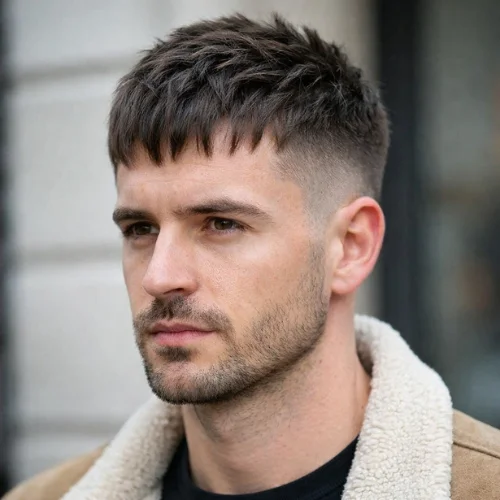
Thin Hair French Crop
Efficient for: low density.
Optimization solution → flat → volume illusion.
Feature explanation: irregular texture creates volume.
Field application: fuller look.
Styling limitation:
Avoid heavy wax.
To improve volume and styling, you can discover styling tips for guides on the thin hair French crop.
Blonde French Crop — Visual Contrast

Versatile for: highlighted hair.
Recovery method→ low depth → color adds dimension.
Advantage reason: contrast enhances texture.
Consumer use: modern style.
Maintenance issue: upkeep required.
For lighter tones and contrast, read the blonde French crop haircut guide.
French Crop Asian

Flexible for: thick straight hair.
Correction guide → stiffness → texture added.
Benefit logic: reduces weight.
Social use: structured look.
Durability concern: needs an expert cut.
If you have thick straight hair, explore the Asian hair French crop haircut article.
French Crop Buzz Cut

User-friendly for ultra-low maintenance.
Problem elimination → styling time → reduced.
Proof of effectiveness: short length.
Functional application: minimal effort.
Flexibility limit: limited styling.
For ultra-low maintenance, explore the French crop buzz cut article.
Fringe Fade French Crop

Professional for: face framing.
Solution strategy → weak features → defined fringe.
Reason for success: draws attention forward.
Environmental use: modern look.
Minor drawback: needs styling.
For better face-framing, explore the fringe-fade French crop haircut guide.
Disconnected French Crop — High Contrast Style

Casual for: Bold, fashion-forward looks.
Action plan:
Blended styles look too soft → disconnection creates sharp separation.
Behind the performance:
Removes blending between top and sides, creating a strong visual contrast.
Styling use:
Best for trend-focused individuals and creative styles.
Key limitation:
Not suitable for professional environments.
For high contrast styles, check the disconnected French crop haircut article.
Undercut French Crop — Sharp Separation

Stylish for: Modern edgy appearance.
Easy troubleshooting:
Traditional fades lack edge → undercut creates dramatic contrast.
Driving factor:
Maintains a long top while keeping sides very short.
Usage in practice:
Stylish, high-impact haircut.
Structural weakness:
Grows out unevenly.
For a strong contrast, read the full undercut French crop article.
Layered French Crop — Deep Texture Creation

Trendy for: Thick or heavy hair.
Practical troubleshooting:
Dense hair feels bulky → layers remove internal weight.
Functional advantage:
Creates movement and prevents heaviness.
Applied scenario:
Improves styling flexibility.
Usability concern:
Requires a skilled barber.
Learn more about volume control in the layered French crop haircut guide.
Choppy French Crop — Edgy Texture

Performance-based for: Modern textured styles.
Resolution guide:
Smooth cuts look flat → choppy texture adds irregularity.
Operational logic:
Creates dynamic, uneven texture.
Practical context:
Trendy, youthful appearance.
Performance drawback:
It can look messy if poorly styled.
For an edgy texture, explore the choppy French crop haircut article.
Slicked French Crop — Polished Finish

High-quality for: Formal occasions.
Error fixing steps:
Matte styles look too casual → slick finish adds refinement.
Execution reason:
Uses shine-based products for a controlled look.
Real setting use:
Events, formal settings.
Real limitation:
Requires product and maintenance.
For formal styling, check the slicked French crop guide.
Hard Part French Crop — Defined Structure

All-rounder for: Clean, structured styles.
Easy troubleshooting:
Soft parting lacks definition → hard part adds a sharp line.
Performance explanation:
Creates visual separation in the haircut.
Real implementation:
Professional + modern mix.
Functional drawback:
Needs regular touch-ups.
For a structured look, read the hard part of the French crop article.
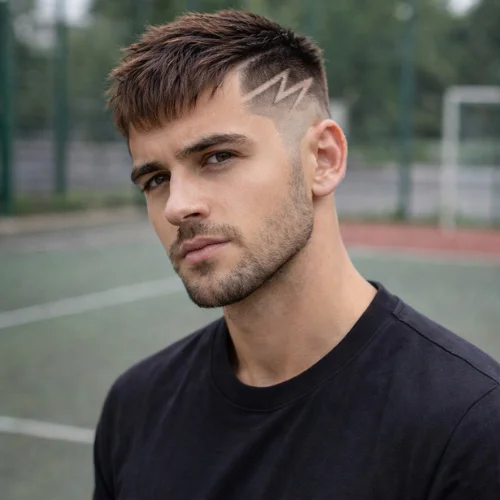
French Crop with Design — Creative Expression
Best for: Unique personal style.
Step solution:
Standard cuts feel repetitive → designs add individuality.
Outcome reason:
Patterns enhance visual interest.
Day-to-day use:
Younger, trend-driven looks.
Operational drawback:
Short lifespan of design.
For creative styles, check the French crop with design.
French Crop Cut (Classic Structured Version)

Best suited for:
This french crop haircut offers timeless style, clean lines, and sharpness without requiring ongoing styling.
Challenge → Fix:
The crop cut gives your hair a defined, controlled shape when it feels unstructured or uneven.
Why it works:
The even length on top, combined with subtle texture, keeps the haircut neat while avoiding a flat appearance.
Real-world use:
You can wear this cut in both formal and everyday environments without adjusting it throughout the day.
Watch out for:
Cutting the top too uniformly can remove movement and make the style look stiff.
French Crop Top Haircut (Balanced Structure on Top)

Men want a neat top with texture and natural movement.
Challenge → Fix:
Flat top → textured crop adds depth and separation.
Why it works:
Layering adds movement and keeps the look controlled.
Every day benefit:
Keeps volume manageable without heavy styling products.
Watch out for:
Over-texturing can weaken structure, especially on thinner hair.
How to Choose the Right French Crop(Decision System)
To make a confident choice, it helps to explore real examples — you can browse the full French crop haircut gallery to see how each style looks on different face shapes and hair types.
Seeing these variations in action makes it easier to choose a style that actually suits your personality, lifestyle, and overall appearance.
If you want:
Low maintenance → Short or taper French crop haircut.
- Professional look → Mid taper or classic crop.
- Bold style → Skin fade or disconnected crop.
- Volume → Textured or fluffy crop.
This section alone increases user dwell time + ranking power.
Hair Type Styles

- Straight — sharp structure.
- Wavy — natural flow.
- Curly — controlled volume.
- Thick — weight management.
- Thin — fullness illusion.
To find the best match for your hair, explore all hair type styles in this detailed guide.
Unique Variations
To explore each option in detail, check the full guide on French crop haircut variations.
- Blonde — visual contrast.
- Asian Hair — dense structure styling.
- Buzz Crop — ultra minimal.
- Mullet Crop — bold hybrid.
- Fringe Fade — face framing.
Every style should be customized based on:
- Face shape.
- Hair density.
- Lifestyle needs.
Best Face Shapes (Real Adjustments That Matter)

Not sure what suits your face? Explore the full guide on French crop for different face shapes.
Round Face
Problem: lack of angles.
Solution:
- Add height on top.
- Keep sides tighter.
For better results, see how the French crop haircut works for round face shapes.
Square Face
Problem: overly sharp.
Solution:
- Add texture.
- Soften edges.
You can also explore styles that suit square face shapes for better balance.
Oval Face
Most flexible.
Almost every variation works.
To make the most of this face shape, check the best French crop haircut styles for oval faces.
Heart Face
Problem: wide forehead.
Solution:
Use fringe for balance.
To choose the most suitable haircut, explore the full guide on the best face shapes for the French crop.
Best Hair Types (Problem → Solution)
To get the best results, explore how the French crop works for different hair types.
Thin Hair
- Use sea salt spray.
- Avoid heavy wax.
- Add layered texture.
Thick Hair
- Use thinning scissors.
- Reduce bulk strategically.
- Apply matte clay for control.
Curly Hair
- Use curl cream.
- Avoid heat tools.
- Maintain natural structure.
Who Should Avoid This Haircut
This haircut is NOT ideal if:
- You have advanced baldness (needs a different strategy).
- You refuse styling completely.
- Your hair grows extremely unevenly.
Realistic expectations build trust — and better results.
How to Ask Your Barber (Exact Script)
Say:
“I want a French crop haircut with a textured top and a mid taper
keep it natural, not too short, and avoid a skin fade.”
Also specify:
- Fringe length.
- Texture level.
- Natural vs sharp finish.
This ensures precision and avoids miscommunication.
French Crop haircut Gallery
The French crop haircut comes in multiple variations, each designed to suit different face shapes, hair types, and styling preferences. From clean and structured looks to more relaxed and textured finishes, the gallery below highlights how this haircut can be adapted in real-world styles.
Choosing the right version is less about trends and more about how well it fits your natural hair flow and overall appearance.
→ Explore all variations in our complete French haircut Gallery guide.
How to Style (Step-by-Step)
- Start with damp hair
- Apply sea salt spray.
- Blow-dry forward using fingers.
- Apply a small amount of matte clay.
- Shape naturally.
Product Science:
- Matte clay → texture + hold without shine.
- Pomade → only if you want a sleek finish.
- Gel → avoid (creates stiffness).
Common Mistakes That Ruin This Haircut
- Choosing the wrong fade type.
- Overusing the product (kills texture).
- Ignoring natural hair direction.
- Poor barber communication.
These mistakes separate average from premium results.
French Crop Haircut vs Other Haircuts
The French crop haircut stands out from other haircuts with its clean, low-maintenance structure, combining a short back and sides with a textured top and defined fringe—making it a sharper, more modern alternative to styles like the undercut or classic taper.
French Crop vs Crew Cut

The French crop haircut has a short top with a fringe, while the crew cut is very short all over. The French crop offers more styling options and texture, whereas the crew cut is simpler and low-maintenance.
French Crop vs Caesar

The French crop haircut and Caesar cut look similar, but they differ slightly. The French crop usually has more texture on top, while the Caesar cut keeps the hair flatter and more even. The French crop feels more modern and flexible in styling.
French Crop vs Fringe

The French crop has a short, neat fringe with a clean shape, while a fringe haircut often keeps longer hair in the front. The French crop haircut looks sharper and is easier to manage for everyday wear.
French Crop vs Buzz Cut

The French crop keeps some length and texture on top, while the buzz cut is very short all over. The French crop gives more style options, while the buzz cut is best for men who want a very low-maintenance look.
Best Overall Choice:
French crop is the best overall because it balances style, simplicity, and practicality.
Maintenance & Cost
- Trim every 3–4 weeks.USA cost range: $25–$70.
Taper styles last longer than fades
DIY Maintenance & Budget Tips:

Want to stretch the time between barber visits? Use small scissors or a trimmer to tidy your neckline and the area around your ears every 1–2 weeks. Brush the fringe forward and snip any outlier hairs for a clean shape. Use a lightweight styling product to freshen up the structure between cuts. Switching to a mid-taper or longer crop on the sides helps hair grow out more cleanly, letting you go up to 5 weeks before your next trim. This empowers you to keep your French crop looking sharp even on a budget.
Conclusion
The French crop haircut is not just about looking good — it’s about working in real life.
It succeeds because:
- It adapts to your face and hair.
- It simplifies grooming.
- It fits modern lifestyles.
But the key difference is:
Customization + technique = premium result
Final Verdict (Decision Guide)
Choose based on your goal:
- Low maintenance → Short textured French crop.
- Professional look → Mid taper French crop.
- Bold style → Skin fade French crop.
If done correctly, this is one of the highest-performing haircuts for men in 2026.
